


.png "Durable Lightweight Spinner Luggage")




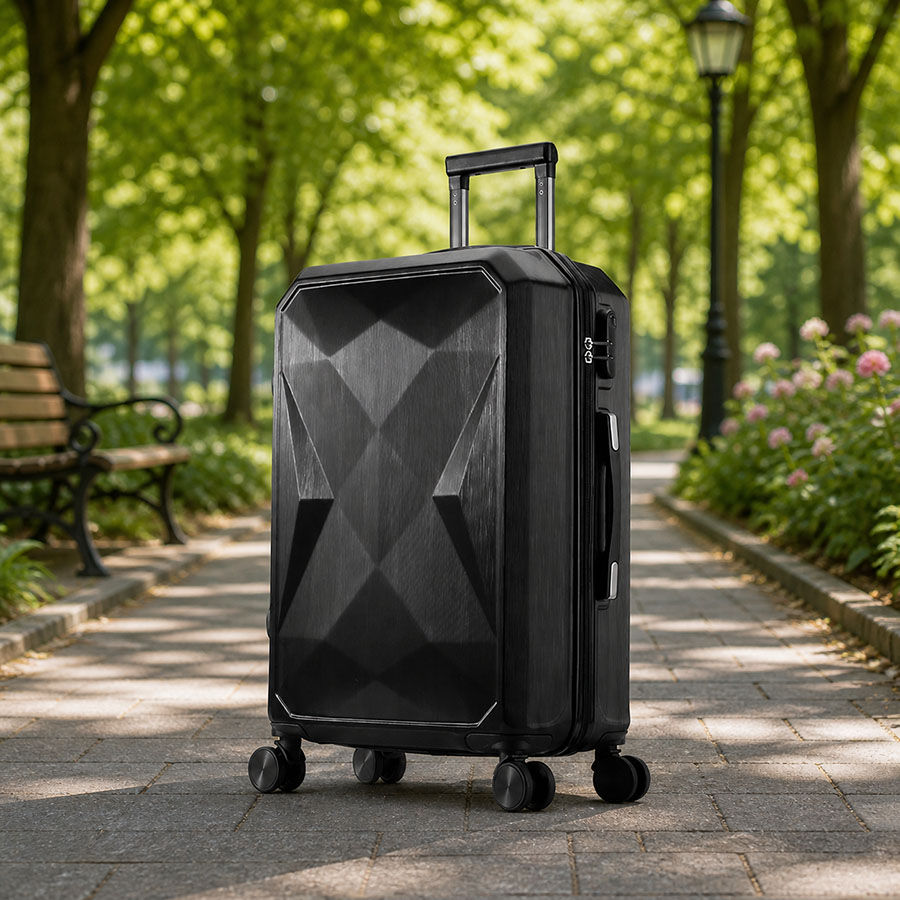
Private Label Luggage Strategy: How to Choose the Right OEM Manufacturer and Build a Strong Brand
Why Private Label Luggage Is Growing Worldwide
The global luggage market is becoming increasingly competitive. Consumers expect travel products to combine attractive design, practical features, reliable durability, and a clear brand identity.
For distributors, wholesalers, retailers, and e-commerce businesses, competing only on price is rarely a sustainable strategy. A private label luggage collection gives a company greater control over product positioning, design details, pricing, packaging, and customer experience.
However, a successful private label program depends on more than applying a logo to an existing suitcase. It requires clear market positioning, consistent manufacturing, reliable quality control, and a supplier capable of supporting the brand as it grows.
Working with an experienced OEM hard shell luggage manufacturer China can help businesses turn product concepts into commercially viable luggage collections while reducing production and supply-chain risks.
What Is Private Label Luggage Manufacturing?
Private label luggage manufacturing allows a business to sell suitcases under its own brand while production is handled by a specialized factory.
Depending on the project, private label customization may include:
Brand logos and labels
Custom shell colors
Surface finishes and textures
Interior lining and organization
Wheels, handles, zippers, and locks
Cartons, hangtags, manuals, and retail packaging
Product combinations and luggage set configurations
Private label production often begins with an existing product platform and adds brand-specific features. OEM development may involve deeper changes to product specifications, structure, components, or appearance.
An experienced custom luggage manufacturer should help buyers determine which approach is more suitable for their budget, target market, order quantity, and launch schedule.
Why Private Label Is an Effective Growth Strategy
Stronger Brand Recognition
Generic luggage products are easy to compare and often compete mainly on price. A private label collection allows a business to create a more recognizable identity through consistent colors, design language, packaging, and product features.
When customers associate a distinctive travel experience with a brand, the business has a better opportunity to build loyalty and generate repeat purchases.
Greater Product Differentiation
A private label strategy enables brands to develop products for specific audiences rather than selling the same standard models as competitors.
For example, a collection may target:
Frequent business travelers
Family vacation customers
Lightweight travel users
Premium lifestyle consumers
Online shoppers seeking functional value
Retail customers looking for coordinated luggage sets
A capable custom suitcase manufacturer can help buyers differentiate products through shell textures, color matching, interior layouts, wheel systems, trolley handles, trims, and packaging.
Better Control Over Pricing and Positioning
Private label products allow businesses to build value around their own brand instead of promoting another company’s name.
This gives the buyer greater control over:
Retail pricing
Sales channels
Product presentation
Promotions
Collection planning
Long-term brand positioning
How to Plan a Private Label Luggage Collection
1. Define the Target Customer
Before selecting a suitcase, buyers should clearly define who will use the product.
Business travelers may prioritize efficient organization, smooth mobility, and professional styling. Leisure travelers may focus more on lightweight construction, color options, and packing capacity. Premium consumers may expect refined finishes, reliable components, and stronger attention to detail.
A clear customer profile makes it easier to select the right materials, sizes, functions, and price level.
2. Choose the Right Product Structure
The product structure should match both customer needs and the intended sales channel.
Common private label categories include:
Carry-on suitcases
Medium checked luggage
Large checked luggage
Two-piece or three-piece luggage sets
Expandable zipper luggage
Business travel luggage
Family travel collections
Working with a professional checked luggage OEM factory can help a brand develop coordinated sizes and specifications for a complete product family.
3. Confirm the Customization Scope
Buyers should clarify which elements need to be customized before sample development begins.
Typical decisions include:
Shell material
Product dimensions
Weight target
Color and finish
Logo position
Lining design
Wheel and handle configuration
Lock type
Expansion function
Packaging requirements
Clear specifications reduce unnecessary revisions and help the factory provide a more accurate quotation and development schedule.
Choosing the Right Manufacturing Partner
Manufacturing Experience Matters
Hard shell luggage manufacturing requires more than assembling components. It involves material selection, shell forming, zipper installation, frame and wheel alignment, trolley adjustment, interior assembly, inspection, and packaging.
Since 2018, Lutu Luggage has focused on the development and manufacturing of zipper luggage and has served as a manufacturing partner for domestic and international brands.
A specialized zipper luggage factory is better positioned to understand the details that affect daily use, including wheel noise, trolley smoothness, zipper performance, shell resilience, and final product consistency.
Flexible Production Supports Brand Growth
Many private label businesses do not begin with very large orders. They may first test a design, launch a limited collection, or offer several colors in smaller quantities.
A flexible production partner can support:
Initial market testing
Small-batch customization
Multiple styles or colors
Seasonal replenishment
Larger repeat orders
Long-term collection expansion
Lutu Luggage operates flexible production arrangements that can support both high-volume orders and smaller, multi-style customization projects while maintaining consistent quality.
This flexibility is particularly valuable for growing brands that need to manage inventory carefully while responding to market feedback.
Why Material Selection Is Critical
Material quality affects luggage weight, impact resistance, flexibility, appearance, and long-term customer satisfaction.
When evaluating a polycarbonate suitcase supplier, buyers should consider more than the material name alone. They should also review material consistency, shell thickness, resilience, surface finish, and suitability for the target price segment.
Lutu Luggage selects high-quality imported raw materials to help achieve a balance of lightweight performance, strength, and resilience. The company also offers surface treatments such as matte, glossy, and special textures, allowing brands to create different visual identities for their collections.
For private label brands, stable material quality is important because variations in color, texture, or shell performance can affect product reviews and brand credibility.
Why Quality Control Protects a Private Label Brand
When a suitcase is sold under the buyer’s own name, every product issue directly affects that brand.
Common quality risks may involve:
Noisy or unstable wheels
Difficult trolley movement
Zipper problems
Surface defects
Component mismatch
Packaging damage
Inconsistent colors
Weak assembly
An effective quality-control system should begin before production rather than relying only on final inspection.
Jiangxi Travel Luggage applies strict incoming-material controls, performs inspection throughout production, and conducts sampling checks before shipment. Experienced workers also focus on details such as wheel noise and trolley smoothness.
This process helps reduce inconsistencies and supports more reliable product performance across repeat orders.
A Practical Private Label Development Process
A structured development process can help buyers reduce delays and avoid misunderstandings.
Step 1: Product Brief
The buyer provides the target market, price positioning, sizes, materials, estimated quantity, desired features, and packaging requirements.
Step 2: Product and Customization Review
The factory evaluates suitable product platforms, component options, surface finishes, and customization feasibility.
Step 3: Sample Development
Samples are produced for evaluation of appearance, dimensions, function, components, and packaging.
Step 4: Specification Confirmation
The buyer and factory confirm the approved sample, colors, logo, materials, components, quality requirements, and packing method.
Step 5: Mass Production and Inspection
Production follows the confirmed specification, with quality checks performed during key manufacturing stages.
Step 6: Final Inspection and Shipment Preparation
Finished products are checked, packed, and prepared according to the agreed shipping requirements.
This process is especially important when working with an OEM hard shell luggage manufacturer China, because clear documentation helps both parties maintain consistent expectations across product development and mass production.
Questions to Ask Before Selecting a Supplier
Before beginning a private label project, buyers should ask:
Does the factory specialize in the required luggage category?
Can it support both trial orders and larger repeat orders?
Which materials and surface finishes are available?
How are wheels, handles, zippers, and shells inspected?
Can the supplier maintain color and specification consistency?
What customization is possible without developing a completely new mold?
How does the factory manage quality during production?
Can it support multiple sizes, colors, or product combinations?
What information is required before sample development?
The answers help buyers evaluate whether a supplier is suitable for long-term cooperation rather than a single transaction.
Why Work with Jiangxi Travel Luggage Factory?
Jiangxi Travel Luggage focuses on creating continued value for customers through product quality, manufacturing flexibility, and attention to detail.
Its relevant capabilities include:
Specialization in zipper luggage since 2012
High-quality imported raw materials
Matte, glossy, and special-texture surface options
Experienced workers focused on component performance
Strict incoming-material control
Inspection throughout production
Pre-shipment sampling inspection
Support for both larger orders and flexible multi-style customization
These capabilities make Jiangxi Travel Luggage a suitable manufacturing partner for businesses seeking to establish or expand a private label luggage collection.
Frequently Asked Questions
What is the difference between private label and OEM luggage?
Private label production usually starts with an existing suitcase design and adds custom branding, colors, packaging, or selected components. OEM projects generally involve deeper customization based on the buyer’s specifications or product concept.
Can a private label luggage brand begin with a smaller order?
This depends on the selected product, customization scope, material availability, and factory production arrangement. A flexible manufacturer may be able to support smaller, multi-style projects before the brand moves into larger repeat orders.
Which parts of a suitcase can be customized?
Customization may include shell color, surface texture, logo, lining, zipper, wheels, handles, locks, interior organization, packaging, and product combinations. The available options should be confirmed with the manufacturer during product evaluation.
How should buyers evaluate a luggage factory?
Buyers should review manufacturing specialization, material control, component quality, inspection procedures, customization flexibility, communication, and the ability to maintain consistency across repeat orders.
Conclusion
Private label luggage manufacturing can help brands create stronger differentiation, improve control over pricing and product presentation, and build long-term customer recognition.
Success requires more than a logo. It depends on clear market positioning, appropriate product design, dependable materials, consistent quality control, flexible production, and effective cooperation with the manufacturing partner.
Businesses planning a new private label collection should share their target market, preferred suitcase sizes, material requirements, estimated order quantity, desired customization, and packaging needs with the factory.
With the right manufacturing partner, a product concept can become a consistent, market-ready luggage collection that supports sustainable brand growth.
Jiangxi Travel Luggage and Leather Goods Manufacturing Co.Ltd.
Justin Huang(Executive Manager)
Mob./ WhatsApp / Wechat: +86 138 19731968
Email: justin@justtravelluggage.com
Website: www.justtravelluggage.com
Youtube:
https://youtube.com/@boss_luggage_factory?si=hSPCzhqYHvDezlKK
LinkedIn:
http://linkedin.com/in/志军-黄-5b610b126
Instagram:
https://www.instagram.com/45.2513980/
Facebook:
https://www.facebook.com/profile.php?id=61582051708703&sk=reels_tab
Pinterest:
https://www.pinterest.com/Travelluggage001/
.png "Expandable trolley case")
Company Name:
Jiangxi Travel Luggage And Leather Goods Manufacturing Co.Ltd
Tel: +86 13819731968
E-mail: justin@justtravelluggage.com